
Sustainability in Context: Reading the Local, Designing Relevance
ARCHINESIA Architecture Forum #66 highlighted sustainability as a contextual, culturally rooted approachshaped by place, practice, and sensitivity.
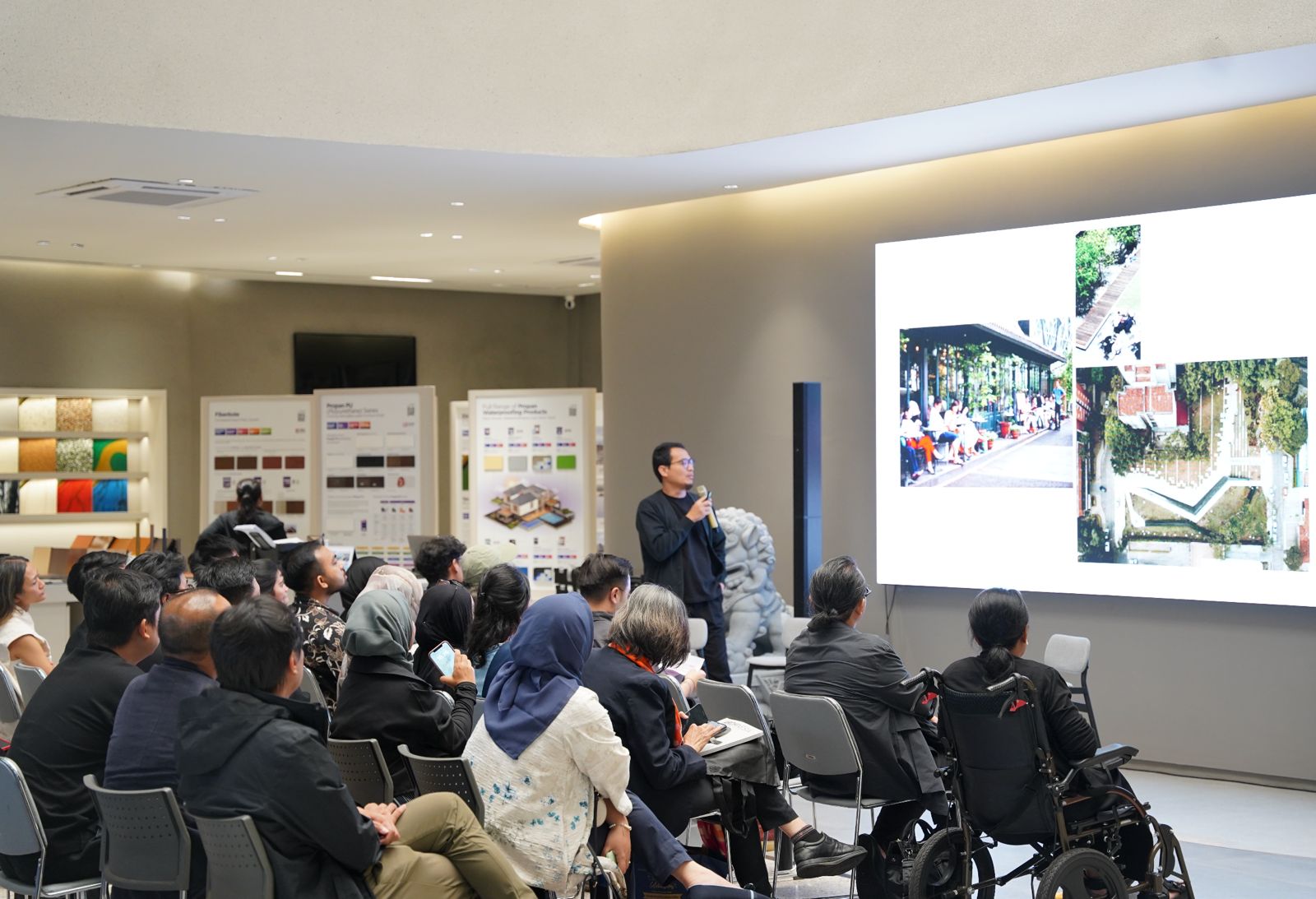
.jpeg)
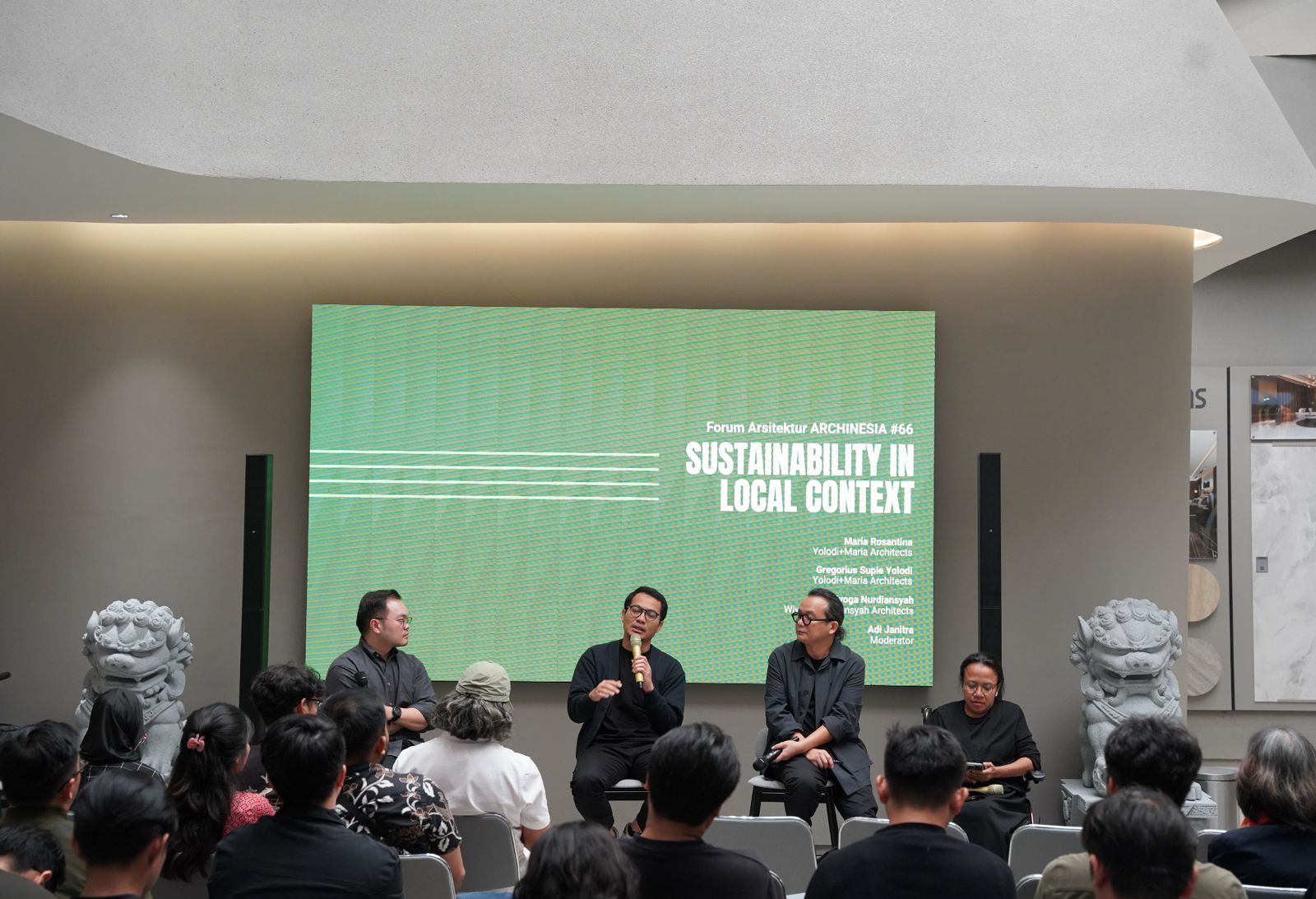
.jpeg)
Every architect holds a different understanding and definition of sustainability. These perspectives often emerge from the context of place as well as practical experience. Differences are also evident in how sustainability is applied in design. This shared diversity of viewpoints became the common thread of ARCHINESIA Architecture Forum #66: “Sustainability in Local Context.”
This edition, a collaboration between Indonesia Design District (IDD) and ARCHINESIA, featured Wiyoga Nurdiansyah of Wiyoga Nurdiansyah Architects, alongside Gregorius Supie Yolodi and Maria Rosantina of Yolodi+Maria Architects. The forum took place at the Sandimas–Propan Showroom and was moderated by Adi Janitra.
Wiyoga Nurdiansyah opened the discussion with a critical stance toward the term sustainability itself. He noted that the term often feels heavy and normative. In the Indonesian context, however, sustainability can be understood in a more grounded and straightforward way, one of which begins with rereading local context.
Through a post-earthquake wooden house project in Lombok following the 2018 disaster, Wiyoga highlighted the resilience of vernacular architecture. Local timber structures proved to be more adaptive to seismic conditions compared to concrete construction. A similar approach can be seen in a small-scale hotel project in the Blok M area, where sustainability was interpreted through ideas rooted in historical urban planning.
For Wiyoga Nurdiansyah, Sustainability in Local Context is not about certifications or advanced technologies. Instead, it lies in sensitivity toward context. Sustainability emerges when architecture is able to endure and adapt. Social and cultural relevance become just as important as the building’s physical resilience.
This perspective resonates with the approach of Yolodi+Maria Architects. For them, sustainability does not begin with technology or building systems, but with an understanding of space and place. Sustainability discourse that is overly technical is seen as less relevant to everyday architectural practice in Indonesia.
To read sustainability more contextually, Yolodi+Maria employ the 3C framework. Culture serves as the primary foundation of design, encompassing ways of living, values, and local practices. Conservation is interpreted broadly,not only in relation to heritage buildings, but also water, energy, nature, and resources. Carbon, meanwhile, is positioned as a final indicator: a consequence of design decisions rather than the sole objective.
This framework is reflected in the Pustaka Desa Waran Danu project in Donggala, where sustainability is understood as social, structural, and cultural relevance. The building exists as part of community life, not as an object detached from its context. In the Bali Beach Hotel project, sustainability is approached through the conservation of historical values, with collective memory and place identity as key aspects to be preserved.
Through ARCHINESIA Architecture Forum #66, the discussion on sustainability was opened from multiple perspectives. There is no single absolute definition. Only diverse ways of reading context and responding to it through design. A reminder that sustainability in architectural practice is always situational and deeply contextual.